


The Biochemical Synergy of NAC, Vitamin B2, and Zinc: A Tripartite Approach to Nutricosmetic Resilience
Jean Pierre Ribeiro Daquila, PhD Biomedicine, UNICID Brazil
1/25/20262 min read
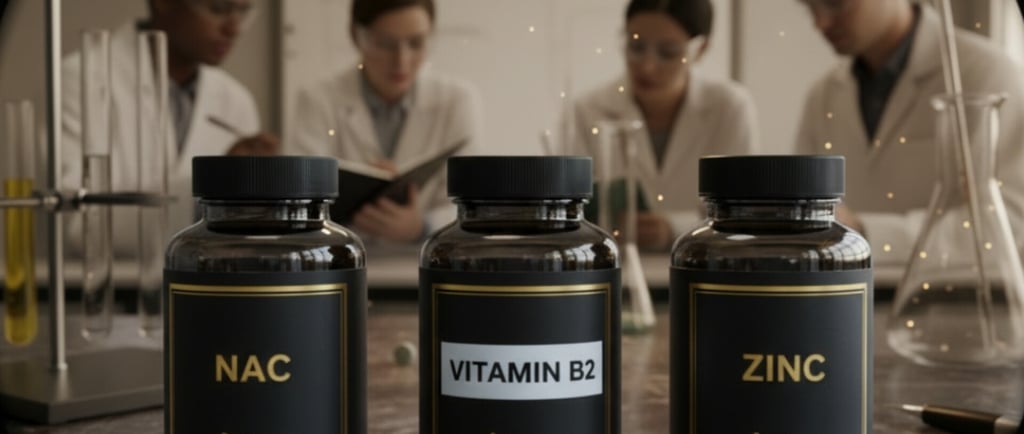
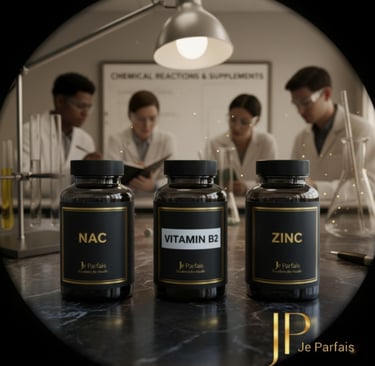
The contemporary paradigm of nutricosmetics has shifted toward the optimization of endogenous biochemical pathways, moving beyond mere supplementation toward true metabolic orchestration. At the forefront of this evolution is the synergistic alliance between N-Acetyl-Cysteine (NAC), Riboflavin (Vitamin B2), and Zinc. While these compounds are often studied in isolation, their collective interaction represents a profound strategy for enhancing the structural integrity of the skin and hair, while simultaneously fortifying the body’s primary defense mechanisms against oxidative proteolysis.
Central to this efficacy is the role of Zinc as a fundamental catalytic cofactor in protein synthesis. By facilitating the cross-linking of keratinocytes, Zinc ensures the structural density of the hair shaft and the mechanical resilience of the cutaneous barrier (Ogawa et al., 2018). This structural foundation is further protected by Vitamin B2, which serves as a vital component of the electron transport chain. By maintaining mitochondrial efficiency, Riboflavin mitigates the accumulation of reactive oxygen species (ROS) that would otherwise compromise collagen stability and lead to premature dermal senescence (Ames, 2018).
The most critical dimension of this triad, however, lies in its capacity to drive the synthesis of Glutathione, a tripeptide characterized in clinical literature as the "Master Antioxidant." Glutathione is a ubiquitous thiol-containing molecule that serves as the cornerstone of the intracellular antioxidant network. Its primary function involves the detoxification of electrophilic compounds and the maintenance of cellular redox homeostasis. Without sufficient levels of Glutathione, cells remain vulnerable to irreversible DNA damage and oxidative stress, which manifest externally as hair thinning and loss of skin elasticity (Pizzorno, 2014).
Furthermore, the synthesis of this molecule is strictly dependent on the availability of its rate-limiting precursor, NAC. Because the body’s ability to generate Glutathione is capped by the supply of cysteine, NAC supplementation becomes the primary lever for elevating endogenous antioxidant capacity (Atkuri et al., 2007). This process is further refined by the presence of Vitamin B2 and Zinc, which act as essential enzymatic cofactors in the glutathione reductase cycle, ensuring that the molecule is continuously recycled and maintained in its active, reduced state. Consequently, the combination of these three elements does not merely supplement the body; it optimizes a self-sustaining cycle of cellular purification and repair.
In light of these complex interactions, achieving the requisite molecular balance through isolated nutrients can be challenging. A more streamlined and scientifically validated approach is the utilization of a specialized formula such as Glutathione Booster by Je Parfais. By integrating NAC, B2, and Zinc into a singular delivery system, this formulation ensures that the metabolic precursors and their necessary cofactors are present in precise ratios, thereby maximizing the endogenous production of the master antioxidant for superior health and aesthetic outcomes.
References
Ames, B. N. (2018). Prolonging healthy aging: Longevity vitamins and proteins. Proceedings of the National Academy of Sciences, 115(43). https://www.pnas.org/doi/10.1073/pnas.1809045115?url_ver=Z39.88-2003&rfr_id=ori:rid:crossref.org&rfr_dat=cr_pub%20%200pubmed
Atkuri, K. R., Mantovani, J. J., Herzenberg, L. A.,
& Herzenberg, L. A. (2007). N-Acetylcysteine—a safe antidote for cysteine/glutathione deficiency. Current Opinion in Pharmacology, 7(4), 355-359. https://pubmed.ncbi.nlm.nih.gov/17602868/
Ogawa, Y., Kinoshita, M., Shimada, S., & Kawamura, T. (2018). Zinc and Skin Disorders. Nutrients, 10(2), 199. https://www.mdpi.com/2072-6643/10/2/199
Pizzorno, J. (2014). Glutathione! Integrative Medicine: A Clinician's Journal, 13(1), 8–12. https://pmc.ncbi.nlm.nih.gov/articles/PMC4684116/